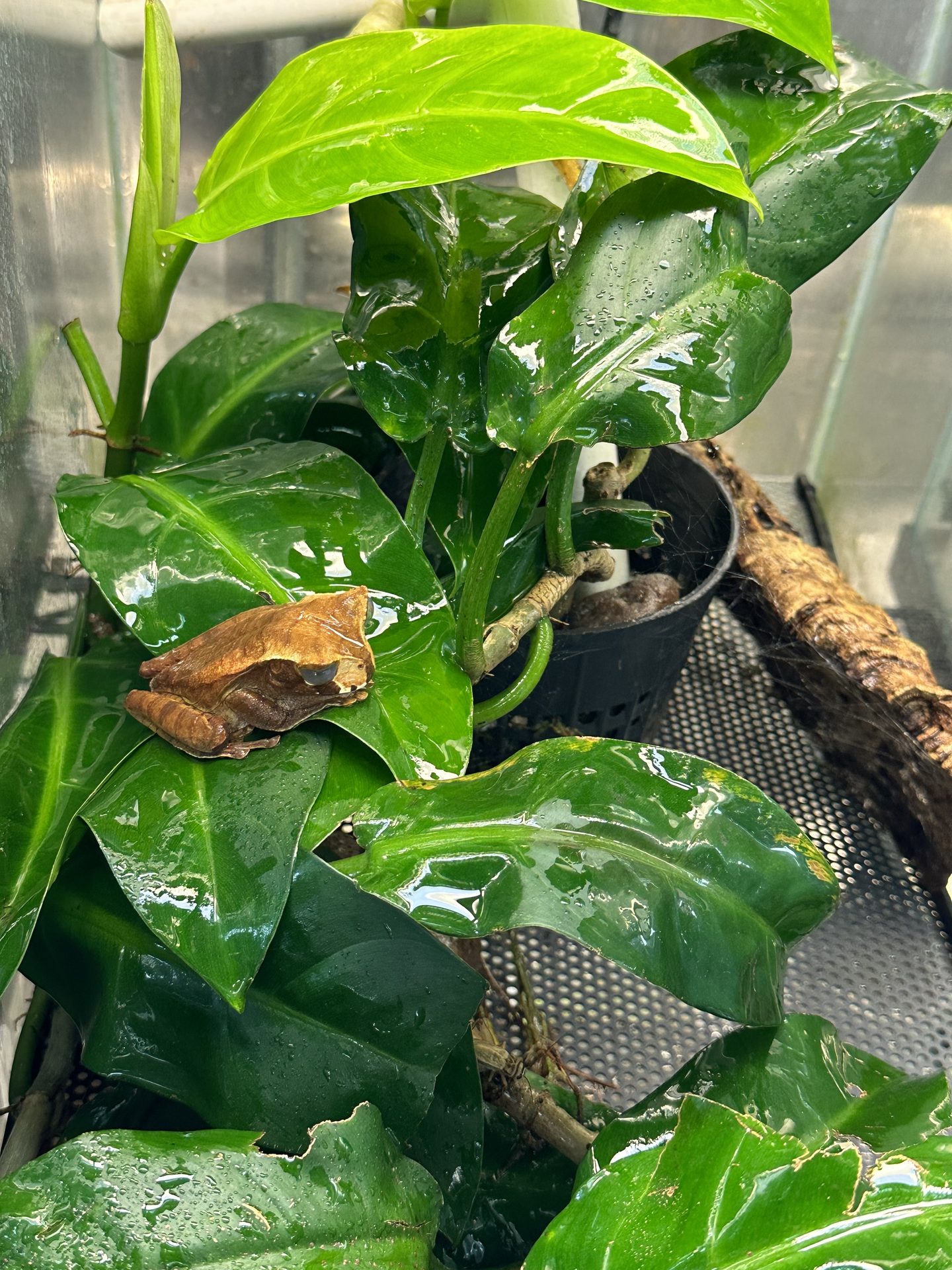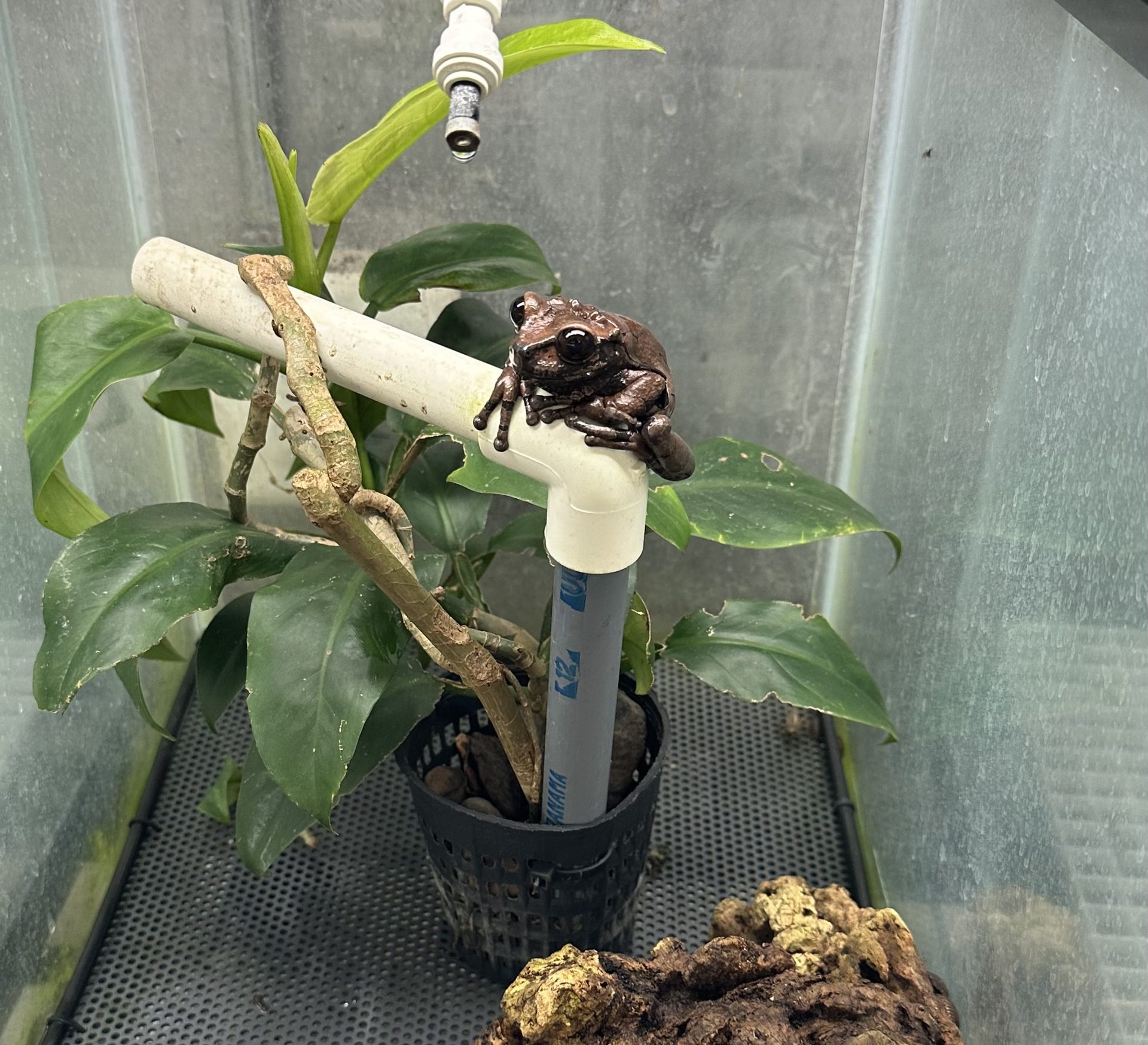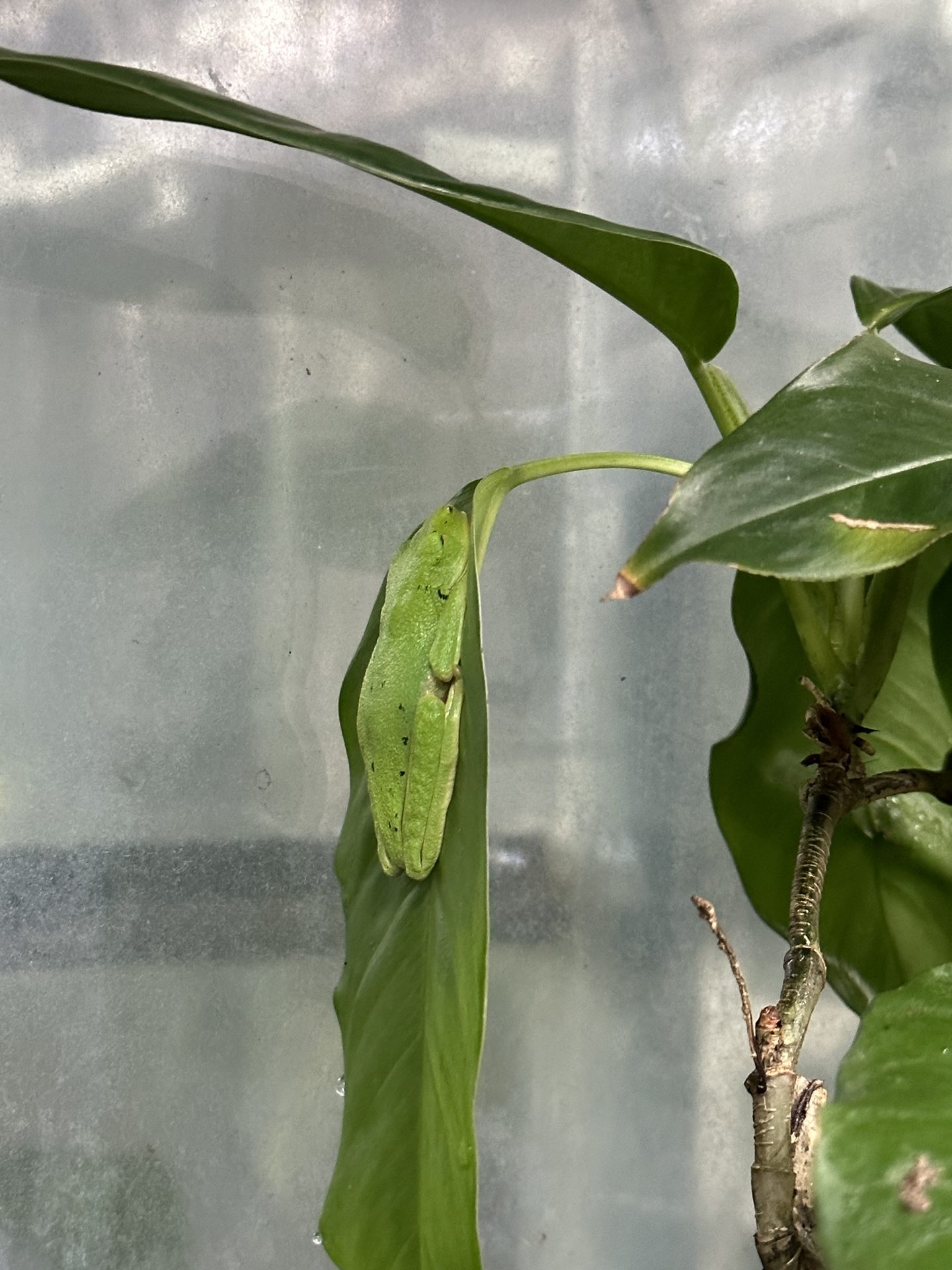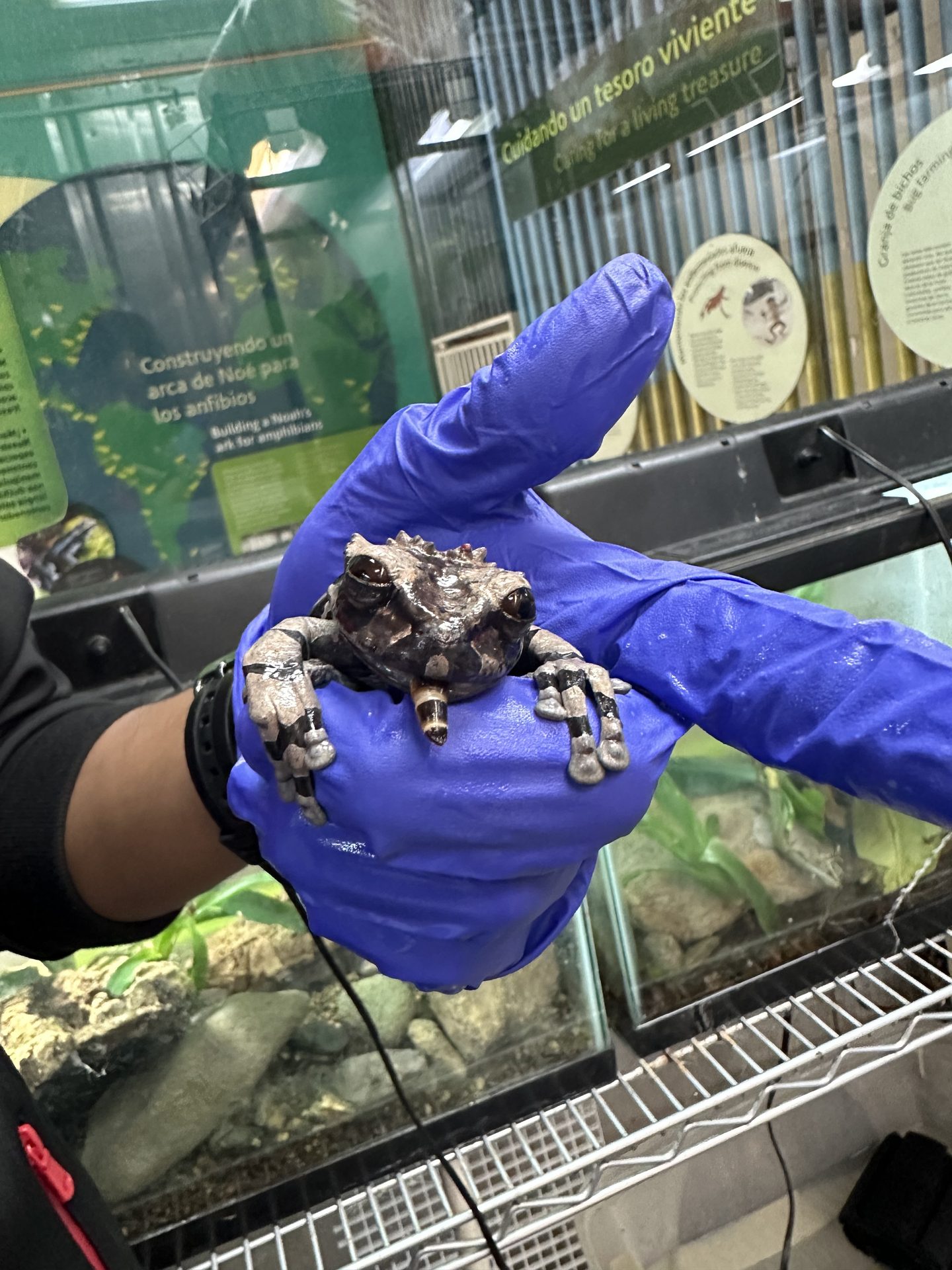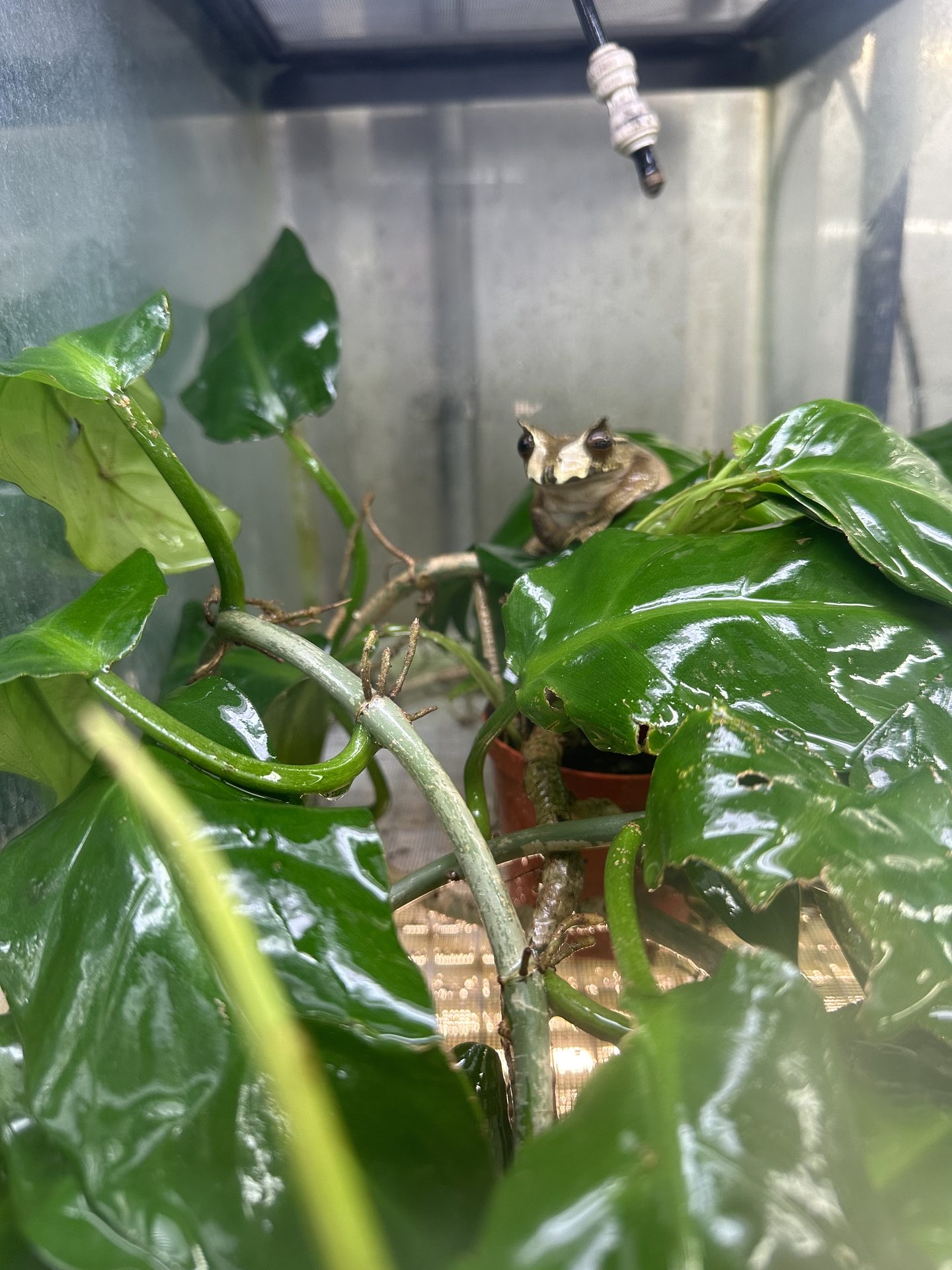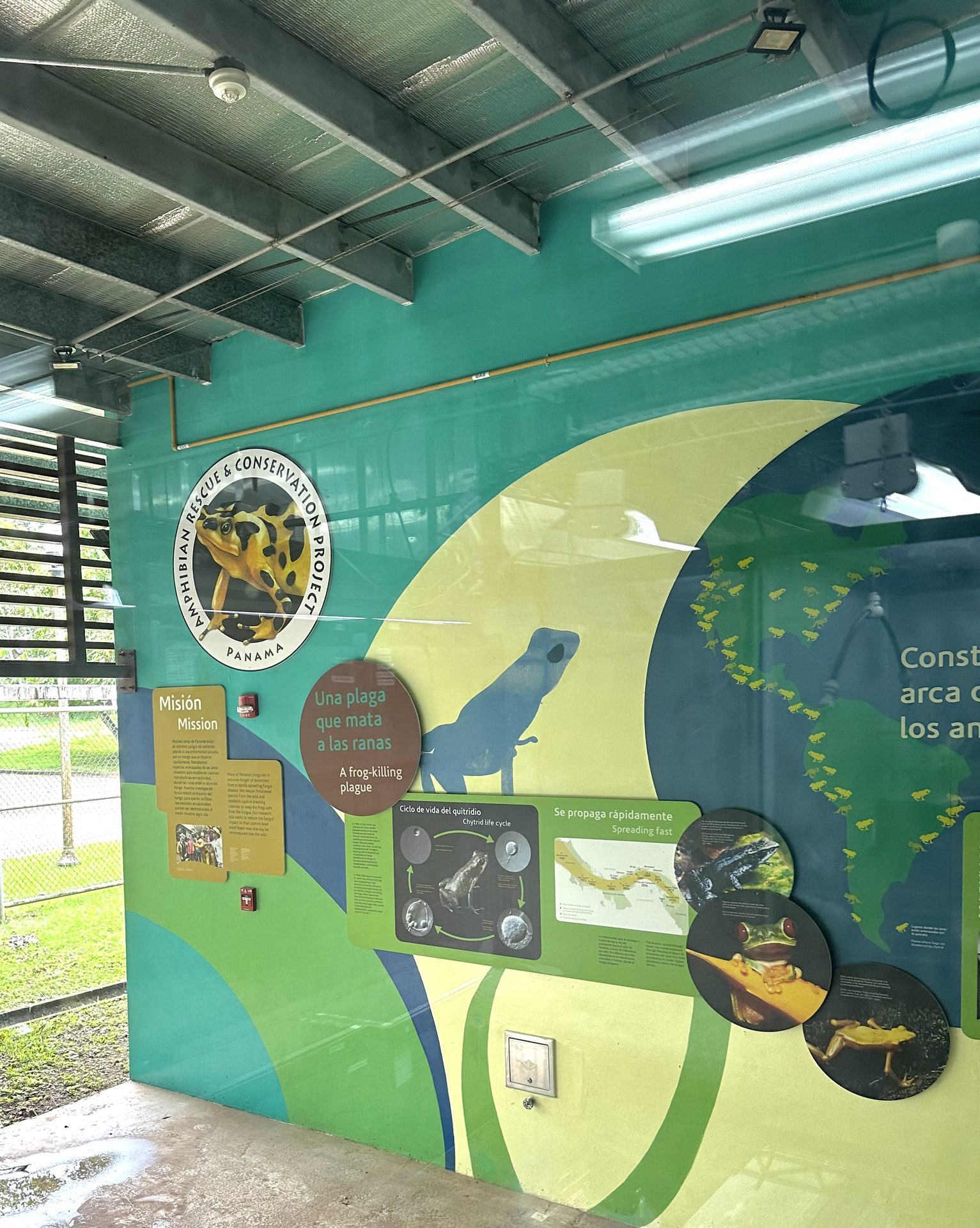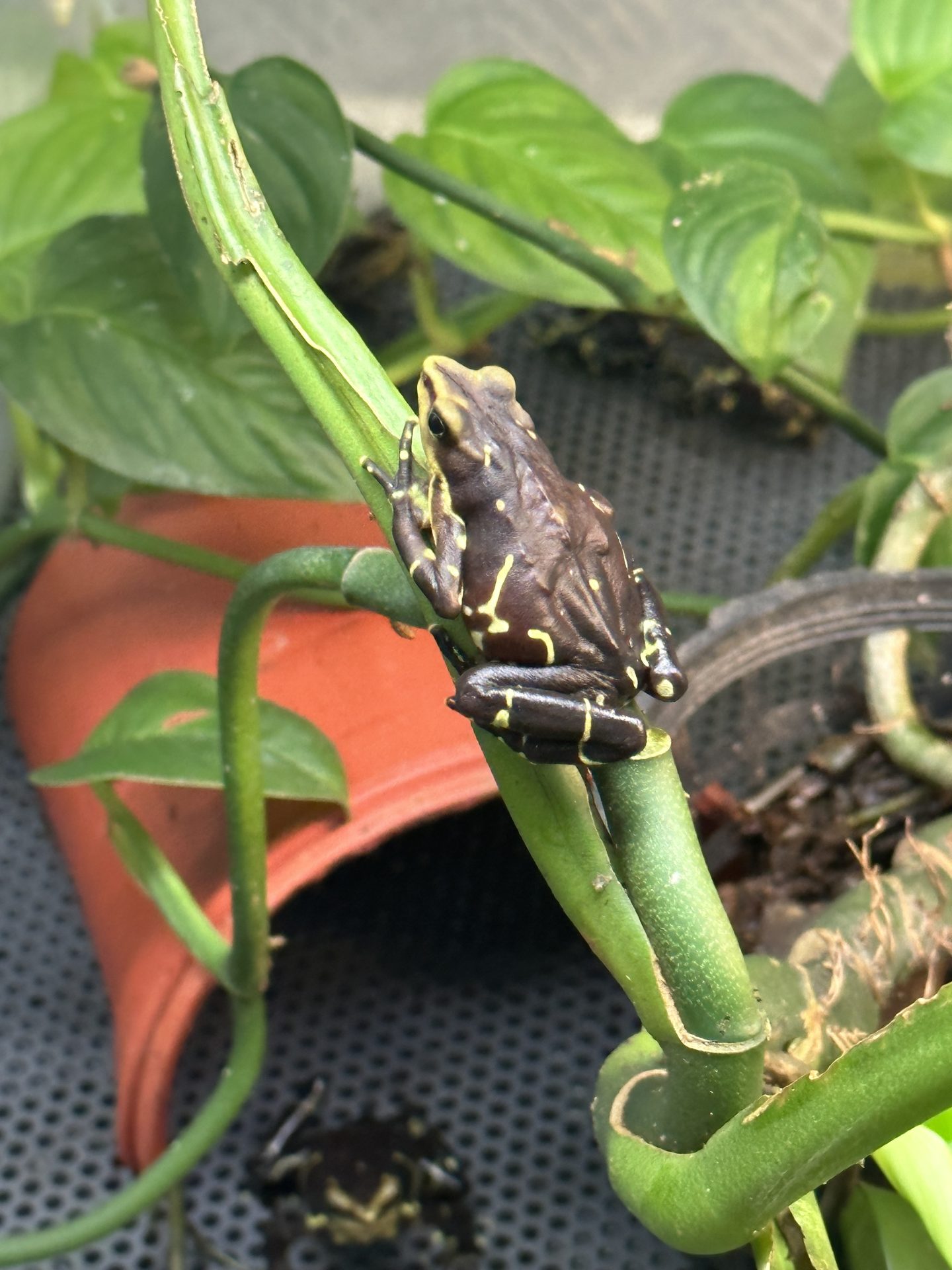
Participé en dos pasantías con el Amphibian Rescue and Conservation Project del Smithsonian Tropical Research Institute (STRI) en Gamboa, Panamá. La primera fue como voluntaria durante julio y agosto de 2023, y la segunda como asistente de investigación en agosto de 2024. El proyecto se dedica a la cría en cautiverio y protección de especies de anfibios en peligro crítico de extinción, incluyendo la rana dorada panameña (Atelopus zeteki), símbolo nacional de Panamá.
Mis responsabilidades abarcaban el mantenimiento diario de los tanques de cría, incluyendo la regulación de niveles de humedad mediante remojos periódicos y la inspección de cada individuo para detectar comportamientos anormales o señales de enfermedad. Asistía en procedimientos de desparasitación, lavado y reensamblaje de contenedores, y en la preparación y distribución de alimento — incluyendo grillos, colémbolos y suplementos vitamínicos específicos asignados según el día de la semana.
También participé en tareas directamente vinculadas al programa de reproducción: armado y supervisión de riachuelos artificiales diseñados para estimular el cruce entre individuos, monitoreo de niveles de pH del agua, y alimentación y seguimiento del desarrollo de renacuajos. Adicionalmente, colaboré en la preparación de medios de cultivo para la cría de moscas de la fruta, un componente esencial de la cadena alimentaria del proyecto.
Más allá de lo técnico y metodológico, lo más impactante de esta experiencia fue participar durante dos años consecutivos con el mismo equipo de investigadores, todos trabajando hacia una meta que tomó años de esfuerzo sostenido. En 2026, ese trabajo culminó en la primera liberación de la rana dorada panameña de vuelta a su hábitat natural — un hito histórico para la conservación de anfibios. Presenciar de cerca la dedicación, la rigurosidad y la perseverancia que exige un proyecto de esta magnitud reafirmó mi vocación y me motivó profundamente a continuar por este camino.
Galería